Joshua D. Drake Blog Posts

With the pending GA release of Star Link, more cities adopting municipal WIFI, and the growth of remote work due to the pandemic, one would assume that cell phone providers would be falling hand over fist to provide quality services at a quality price. Unfortunately this is not the case and it is hurting the future of our workforce.

Carriers currently think that 30GB of Hotspot data is enough for the average digital nomad. While that may have been the case previously, it isn’t any longer. There is a hundreds-of-thousands-strong workforce specializing in Information Technology, Digital Design, Web Development, and other creative industries. They are living, working and adventuring in RVs, Sprinters, Skooolies (pictured), and other vehicle dwelling options. This community is nomadic by design and should not be artificially limited by technology. 


Why is it that we are being charged so much money for so little? Outside of two providers announcing rural initiatives, we are still acting like data needs are small and that they come at a quality price. Data is ubiquitous; it is the new water (for getting work done). In the new economy workers need faster, higher quality, and unlimited amounts of data to get their job done.


Where could you go and what could you experience if you weren’t tethered by the faux limitations of bandwidth?

Resources

Featured Content

Joshua D. Drake     October 13, 2020


Join the PostgreSQL community in Philadelphia on July 13th and 14th 2017 for two days of fantastic PostgreSQL content. July 13th will contain trainings and July 14th will be breakout sessions. The call for papers and sponsors is also open! When submitting papers to PGConf US events, please review the presentation guidelines.

Image result for PGConf US


PGConf US Local events are designed to bring comprehensive educational content and networking opportunities to the "local" PostgreSQL community where the event is being held. They are perfect opportunities to show support for PostgreSQL, find leads and build relationships with other professionals and companies using and support PostgreSQL.


d at Huntsman Hall at The Wharton School

Joshua D. Drake     May 08, 2017


PGConf US in conjunction with NYCPUG is pleased to present PGConf US Mini: NYC on September 14th, 2017. The doors open at 6:30PM and there will be three presentations as well as food, beverages and networking opportunities. Join the community in supporting this great no cost for attendance opportunity.


The following is a list of the Postgres content that will be presented:
  • Partitioning in Postgres v10 by Corey Huinker
  • Building a scalable time-series database on PostgreSQL by Mike Freedman
  • Major Features: Postgres 10 by Bruce Momjian
You can find full details at the PGConf US Mini: NYC website.
These events wouldn't be possible without the great support from our sponsors:

PGConf US Mini events are designed to bring an evening of high quality presentations to the local user groups. They are great opportunities to learn, network and socialize. If your community would like to join us in bringing a mini to your local community get in touch!

Joshua D. Drake     August 24, 2017

With 2020 firmly in the rear view mirror, it is time to look forward and down the highway of 2021. The organizers of People, Postgres, Data have gathered over chat, email, phone, and even a few socially distant, in-person events to determine a strategy for continuing as the most influential and positive community for all things Postgres related.

Sad face

The goal is to resume in-person events. However, out of concern for the health and comfort of our global community, we have made the decision not to host any in-person events until Q4 of 2021. We are prepared to wait until 2022 if that is what the health officials recommend. We know that many will find this news disappointing and we are working diligently to ensure that the health and education of our community is the top priority.

Happy face

We are continuing our popular webinar series, adding new presenters with pertinent content for all of our attendees. We will be adding more professional development and data problem solving topics to our library, and we will no longer be limiting education to just Postgres, as many data and human problems are neutral in the particular platform we happen to enjoy. If there’s a topic you’d like to present or see, we’d love to hear from you!

RSVP for upcoming scheduled events

  • January 26, 1pm ET: All we need to work with SQL is SQL
  • January 27, 1pm ET: PostgreSQL Forks and Knives
  • February 3, 2pm ET: Postgres for SQL Server Users
  • February 4, 1pm ET: Configuring PostgreSQL for Faster Analytic Query Performance
  • February 23, 1pm ET: Blockchain as a Database

Ecstasy 

Postgres Conference 2021: Digital will be happening in May of this year! An overwhelming feeling of great happiness and excitement has our dopamine pumping, and the whole People, Postgres, Data team is basking in it. 


As an all digital conference, we will offer a similar environment to what our community has come to expect: best in class content, professionalism, and top-tier educational opportunities for all who attend! Keep your eyes peeled over the next few weeks for more information on speaking opportunities and how to attend!

Joshua D. Drake     January 20, 2021

In support of our theme of "People, Postgres, Data", the PostgresConf US 2018 hosts its 2nd annual Talent Exchange & Career Fair on Friday, April 20, from 10:30 am - 1:30 pm. This event is free for job seekers and open to the public.
Companies represented include:
  • Amazon
  • Pivotal
  • 2ndQuadrant
  • Microsoft
  • Timescale
  • HighGo
  • Data Dog
  • Fivetran
  • BlueTalon
  • Goldman Sachs
  • forhims
  • Immuta
Last year, the Career Fair brought together employers and candidates in one of the hottest career options available today, Postgres DBA.
New for this year -- Career Mentors and Resume Reviewers
Check out the full schedule for PostgresConf US 2018, and buy your tickets soon!
Joshua D. Drake     April 11, 2018

PostgresConf hopes everyone had a great holiday season and we hope everyone has a fantastic 2019.

With January upon us, we start conference season. This year, PostgresConf 2019 will be in NYC at the Sheraton New York Times Square March 18-22, 2019.

If you have a story about lessons learned with Postgres, a cool feature that you've found a creative way of using, or just some practical knowledge you'd like to share with your fellow Postgres users, submit a talk. Remember, there are many people who are new to Postgres, so introduction levels talks are welcome. The CFP ends this Friday so get your talks submitted soon at:
https://postgresconf.org/conferences/2019#callforpapers

Also, the Early Bird window for PostgresConf 2019 will be ending next Friday, January 18. This tickets are pretty substantially discounted if you purchase them early. On top of the Early Bird discount, for being a member of the NYC Postgres User Group, there is a promo code for an additional 15% off. Just use the code 2019_PUG_NYC when buying your tickets.
Lastly, if you are already in the NYC area we look forward to seeing the community at the Winter Party on the 10th!
We hope to see you at PostgresConf 2019 and remember:


Joshua D. Drake     January 09, 2019


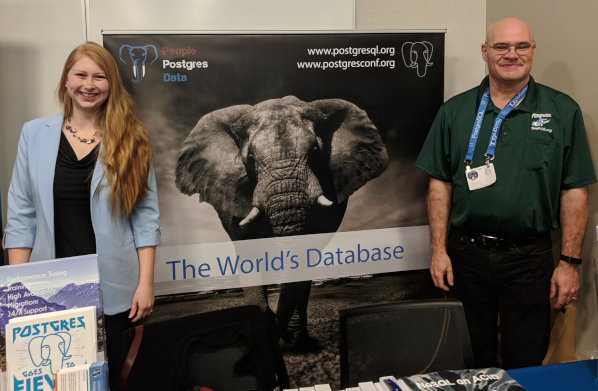
Seattle Postgres and People, Postgres, Data were present at the 20th Anniversary Event of LinuxFest Northwest this weekend! The “Fest” is a conference built around Free and Open Source Software, taking place in Bellingham, Washington. It is a true gathering of over 2000 Open Source practitioners. There was also a well attended Postgres Track and an “Ask the experts” panel.

Highlighted Find

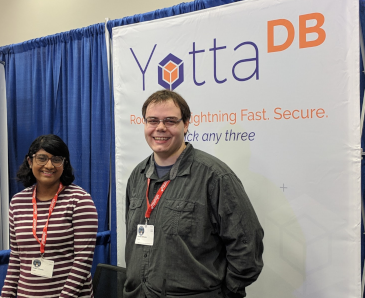
Also at LinuxFest Northwest was YottaDB. YottaDB uses the PostgreSQL wire protocol to allow universal driver access to their in-memory transactional database. This has become a popular way to utilize the maturity of the PostgreSQL code base and reduce overhead in having to maintain a protocol and drivers.

Ecosystem Content

Requesting Feedback

We are looking for good dates to host PostgresConf Philly in July/August 2019 and we are actively reviewing new markets for other Postgres Conference events including Texas, Vancouver B.C., and Seattle. If you have feedback on opportunities in these areaa including dates, venues, or a desire to join the amazing People, Postgres, Data team, let us know at organizers@postgresconf.org.


Noteworthy Commits & Releases

The PostgreSQL git repo was largely bug fixes and updates the past couple of weeks but we have some great releases including migration tools and Distributed SQL:


Join our community

Upcoming Events


People, Postgres, Data and The World’s Database


The World’s Database celebrates all of Postgres, including whichever version, fork, or hybrid used to build yourself, your business, or your hobby. We have Open and Closed Source technologies. We have amazing extensions (TimescaleDB), unique implementations (Yugabyte), and respected forks to solve specific problems such as Greenplum, Azure, and Aurora. We have meetups where professionals can gather to collaborate and network in all major U.S. markets. Most importantly we are an inclusive community celebrating everything surrounding the maturity, extensibility, and growth of the Postgres ecosystem.

Joshua D. Drake     April 29, 2019

Pivotal Sponsor Highlight Blog for PostgresConf 2019


Written by:

Jacque Istok, Head of Data, Pivotal


1. Greenplum has its own community; what do you hope to achieve by joining the Postgres community and PostgresConf?

Both interest and adoption of Postgres have skyrocketed over the last two years, and we feel fortunate to be a part of the extended community. We have worked very hard to uplevel the base version of Postgres within Greenplum to more current levels and to be active in the Postgres community. We see Greenplum as a parallel (and analytic focused) implementation of Postgres, and we encourage the community to continue to embrace both the technology and the goal of the Greenplum project, which is Postgres at scale.


2. Are you planning to provide any new tech (PG features, etc.)?

This year we plan to announce several new things for both Greenplum and Postgres. We’re introducing new innovations in our cloud offerings in the marketplaces of AWS, Azure, and GCP. We also have major news about both our natural language at-scale analytics solution based on Apache Solr, and our multi-purpose machine learning and graph analytics library Apache MADlib. The next major release of Greenplum is a major focus as well, differentiating Greenplum from each of its competitors and bringing us ever closer to the latest versions of Postgres.


3. Are there any rising stars in the community you’d like to give props to?

While it seems a little self-serving, I would like to take the opportunity to give props to the Pivotal Data Team. This team is a 300+ worldwide organization that helps our customers, our prospects, and the community to solve real world and really hard data problems—solved in part through Postgres technology. They all attack these use cases with passion and truly make a difference in the lives of the people that their solutions touch. I couldn’t wish to work with a finer group.


4. What is the number one benefit you see within Postgres that everyone should be aware of?

The number one benefit of Postgres is really its flexibility. This database chameleon can be used for SQL, NoSQL, Big Data, Microservices, time series data, and much more. In fact, our latest analytic solution, MADLib Flow, leverages Postgres as an operational engine. For example, Machine Learning models created in Greenplum can be pushed into a restful API as part of an agile continuous integration/continuous delivery pipeline easily and efficiently—making Postgres the power behind what I still like to think of as #DataOps.


5. What is the best thing about working with the Postgres community?


I deeply admire the passion and consistency of the community behind Postgres, constantly and incrementally improving this product over decades. And because Greenplum is based on Postgres, we get to interact with this vast community of talent. We are also able to more seamlessly interact with ecosystem products that already work with Postgres, making the adoption of Greenplum that much easier.


6. Tell us why you believe people should attend PostgresConf 2019 in March.


PostgresConf is going to be awesome, and I can’t wait for it to start! With Pivotal, Amazon, and EnterpriseDB headlining as Diamond sponsors, Greenplum Summit (along with multiple other summits), and high-quality speakers and content across the board, this year’s PostgresConf promises to be bigger and better than ever and surely won’t disappoint.


We’re thrilled to be back to present the second annual Greenplum Summit on March 19th at PostgresConf. Our theme this year is “Scale Matters”, and what we’ve seen with our customers is that every year it matters more and more. Our users are part of organizations that are generating tons of data and their need to easily and quickly ingest and interrogate all of it is paramount. This is true even more now than ever before as the insights that can be found not only help differentiate them from their competitors, but are also used to build better products and increase customer loyalty.


The day will be filled with real-world case studies from Greenplum users including Morgan Stanley, the European Space Astronomy Centre, Insurance Australia Group, Purdue University, Baker Hughes (a GE company), Conversant, and others, plus presentations and deep-dive tech sessions for novices and experts alike.
Joshua D. Drake     February 14, 2019

On occasion, professional developers will drop into the Postgresql.org mailing lists, meetups, and conferences to ask the question, “Why isn’t PostgreSQL development on Github?” In an effort to see if the demand was really there and not just anecdotal we ran a poll/survey over several social media platforms that asked a simple question:


Should PostgreSQL development move to Github?

    • Yes
    • No
    • No, but to something like Gitlab would be good


We received well over 300 responses and the majority (75%+) chose a move to Github or to something like Github. This was an unscientific poll but it does point out a few interesting topics for consideration:


  1. We need to recognize that the current contribution model does work for existing contributors. We need to have an honest discussion about what that means for the project as contributors age, change employment, and mature in their skill set, etc..
  2. Of the people that argued in comments against the move to a service, only one is a current contributor to PostgreSQL.org core code. The rest were former code contributors or those who contribute in other ways (Advocacy, System administration, etc.).
  3. Would a move to Github or similar option produce a higher rate of contribution?


This poll does not answer point #3; it only provides a data point that people may desire a modern collaboration platform. The key takeaway from the conversation about migrating to Github or similar service is the future generation of developers use technology such as Slack and Microsoft Teams. They expect a bug/issue tracker. They demand simplicity in collaboration and most importantly they will run a cost->benefit analysis to determine if the effort to contribute is a net positive.


It should also be considered that this is not just individual potential contributors. There are many corporations big and small that rely on the success of PostgreSQL. Those corporations will not contribute as much directly to PostgreSQL if the cost to benefit analysis is a net negative. They will instead contribute through other more productive means that produce a net positive when the cost->benefit analysis is run. A good example of this analysis is the proliferation of external projects such as pg_auto_failover, patroni and lack of direct contribution from innovative extension based companies.

Do we need a culture shift within PostgreSQL?

There are those within the Postgresql.org community that would suggest that we do not need a culture shift within PostgreSQL but that does not take into account the very clear market dynamics that are driving the growth of PostgreSQL, Postgres, and the global ecosystem. It is true that 20 years of hard work by Postgresql.org started the growth and it is also true that the majority of growth in the ecosystem and community is from products such as Greenplum, Aurora, Azure, and Timescale. The growth in the ecosystem is from the professional community and that ecosystem will always perform a cost to benefit analysis before contributing.


It is not that we should create radical rifts or disrupt our culture. It is to say that we must evolve and shift our community thinking. We need to be able to consider the big picture. A discussion should never start as an opposition to change. The idea of change should be an open discussion about possibility and vision. It should always include whether the change is a good idea and it should always avoid visceral reactions of, "works for me,” “no,” or “we tried that 15 years ago." Those reactions are immature and lacking in the very thing the community needs to continue to grow: positivity, inclusion, vision, and inspiration.

Joshua D. Drake     May 13, 2019

Congratulations

Henrietta Dombrovskaya, Diversity, Equity, and Inclusion member for PostgresConf as well as Chicago Postgresql organizer nominated for Technologist of the Year!


Career Opportunity

A large, well known media company is seeking a Senior Level PostgreSQL Engineer and Architect. This is an on-site engagement, however the company is known to be lifestyle friendly with reasonable working hours, good pay, and benefits. Specific talents requested are the ability to mentor. The location is Seattle, WA. If you are interested in this position please contact randy@neuringerco.com with your resume.

Great content

Extension Highlight

We wanted to highlight some of the fantastic work that is being done by the ecosystem with Postgres Extensions. Although the base of Postgres is the amazing and extensible PostgreSQL, a lot of users don’t realize that Postgres has the feature they are looking for, if only they were to look to the ecosystem.

Notable Extensions:

  • pgaudit : The goal of pgAudit is to provide PostgreSQL users with the capability to produce audit logs often required to comply with government, financial, or ISO certifications.

  • pg_credereum : pg_credereum is a PostgreSQL extension that provides a cryptographically verifiable audit capability for a PostgreSQL database, bringing some properties of blockchain to relational DBMS.

  • H3-pg : PostgreSQL bindings for H3, a hierarchical hexagonal geospatial indexing system.

Postgres can do what?

There are a ton of Postgres compatible features out there. Some of them are overlooked core features and some of them require installing a different version of Postgres. Here are a few examples:


  • TimescaleDB: Time series data management with Postgres

  • YugabyteDB: Globally Distributed database with PostgreSQL compatibility

  • Postgres-XL: Horizontally partitioned PostgreSQL

  • Agensgraph: Graph capabilities with Postgres

  • PG-Strom: GPU accelerated extension for Postgres 


Upcoming Education and Networking opportunities:


Joshua D. Drake     August 07, 2019